Friday Thought #2 Mountains or Beach?

This is an age old question which I’m sure countless numbers of people have asked themselves at some point in their lives. I would be tempted to say that the majority of people would automatically say ‘beach’ simply because they have spent more time on beaches and very little or no time in mountains, but also because our society tells us that beach holidays are more exotic and the obvious choice for a summer break.

Growing up in the United Kingdom it’s safe to say that we don’t get much experience of impressive mountainous regions or golden sandy beaches, our highest peak being Ben Nevis at 1344m and the hottest average summer temperatures hovering around the mid-twenties. Holidays mean ‘getting away’ and we grow up believing that hot places and beaches are the only option worth considering. This is where the rise in low cost airline flights has come from to countries such as Spain, Greece and Italy; people want a cheap escape to somewhere in the sun, and understandably so. Why would you want a holiday to a freezing snowy place if you spend the other 50 weeks of the year grinding away in a rainy, cold city? Most Brits live in landlocked counties and only see a beach once a year on an annual summer holiday; sand and sea are exciting, different and best of all, cheap. To go on a beach holiday a family needs nothing more than themselves and swimming gear, no expensive hiring of equipment or paying elevated prices for lifts or accommodation. In my experience children couldn’t care less and often have no awareness of whether they are staying in a 5* hotel or in a tiny tent on a crowded campsite so it’s easy to see why beach holidays win for a family.

Skiing holidays are viewed as only for the wealthy and privileged, a pastime which is only ever viewed in magazines or on television for the majority of people. It’s too foreign, too difficult and too expensive, why not just get a cheap flight to Spain with your togs and towel and you’re all set for a holiday? But those who have never visited the Alps or indeed any high mountain range I find are often extremely naive. What people don’t seem to realise is that in the summer months the mountains serve a very different purpose. I remember heading out to the French Alps in July aged 18 to work my first ‘summer season’ and several people asking me if I was going to be a ski instructor. I found this hard to understand because firstly even at 18 and having never stood on a pair of skis, I was aware that you probably needed qualifications and experience to be an instructor, and secondly, it was the summer, didn’t people realise that snow is generally a winter phenomenon??

However I imagine this is a completely different story for those growing up in countries with a more temperate climate or surrounded by mountain scenery such as the States or a lot of mainland Europe. Much of these continents are covered in spectacular peaks which their inhabitants grow up admiring and using in every way, and perhaps these people would have little interest in a beach. You can’t climb it, conquer it, travel down it quickly. I think my opinion of how people view mountains and beaches is very much British as this is the main pool of experience that I can draw from. With the exception of a hardy handful, Brits generally don’t grow up roaming the hills and valleys, children will generally choose building a sandcastle over donning a pair of hiking boots and trailing after dad over the Yorkshire Moors. Most people’s earliest experiences of holidays are on the beach in the sun and this is therefore imprinted in to their brain as what holidays are all about.

But I feel people are missing out on what these places of natural beauty are all about and often it takes an inspirational teacher or a school trip to broaden a young mind as to what nature has to offer. How many of us have walked away from the crowds at a beach and simply sat down to admire the tranquility of the waves, or snuggled up on a rugged coastline to watch the ferocity of a storm? In a similar vein, on those annual skiing trips how many tourists avoid the over-crowded mountain restaurants, take a packed lunch and find a peaceful spot to eat where they can really take in the beauty of a mountain landscape? I worry that ‘holidays’ have become such a desperation for over-worked and fed up people that most don’t even consider where they are going anymore. Wherever is cheap and hot, nothing else matters.

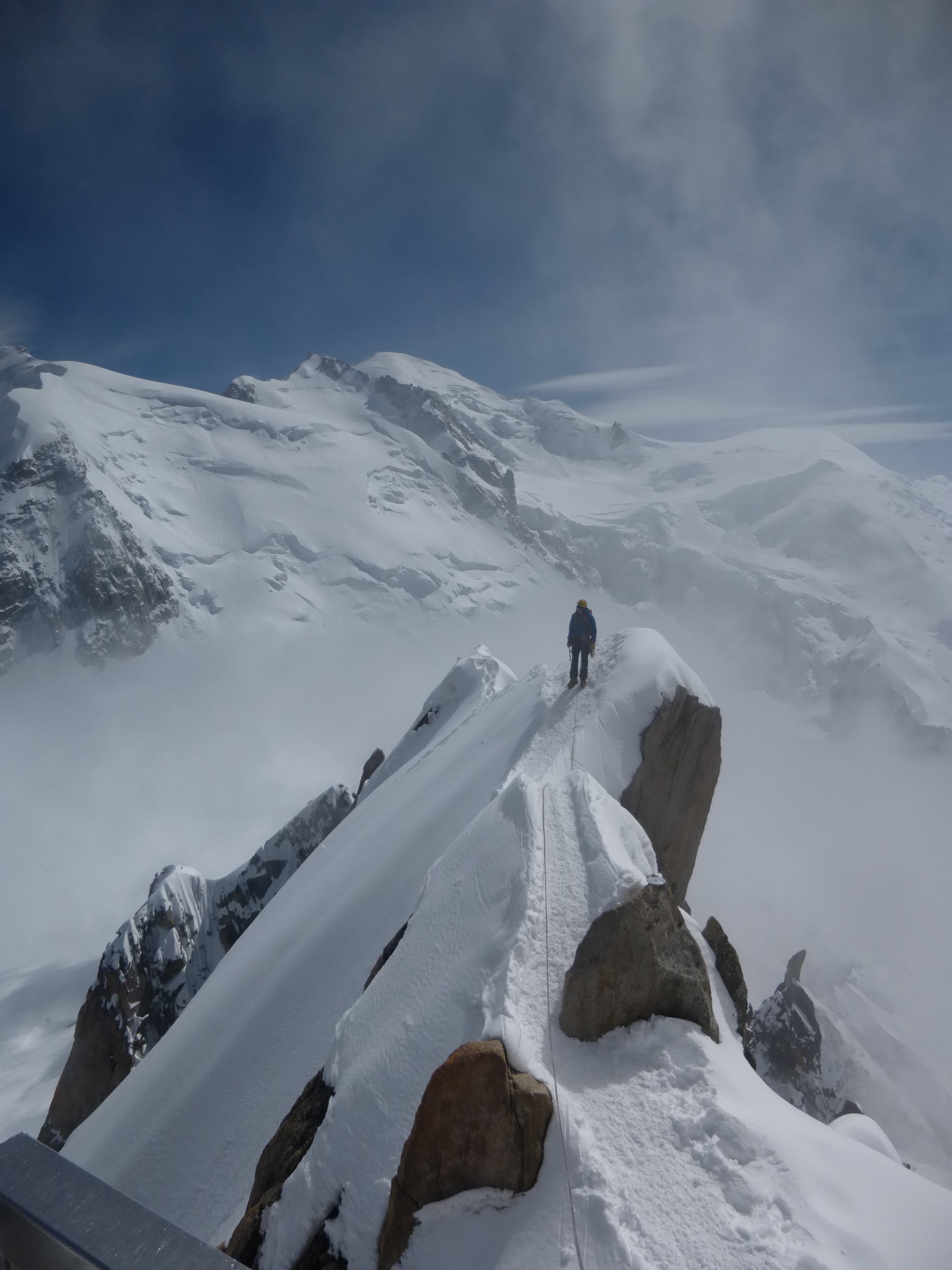
So back to my original question, having spent many a happy summer working on the south and west coasts of France, and having had the fortune to experience the East Coast of Australia in all its glory, I love the beach and the sea. I fell in love with the ‘beach’ way of life in Australia, so simple, so chilled, so beautiful. Scuba diving, snorkelling, sea kayaking, it’s all hard to beat, but for me the mountains will always win. They are a geographical phenomenon and awe-inspiring doesn’t even come close. To me they are nature’s greatest achievement and will be there reigning supreme when everything else is long gone. Life in the mountains is constantly varied and I love that there are 4 very distinct seasons, all of which are magical in their own way. Rather than being a miserable, cold, dark period that everyone hates and wishes away, winter is highly anticipated and never long enough. Every year I think I like winter more and then when summer arrives I change my mind, until the following December when my love of snow is rekindled! Being in the mountains in winter, completely alone with not a soul in sight, having pushed your skis uphill for hours, you have truly earned your turns downhill, and in the summer, having got up at first light and climbed a steep, rocky and exposed ridge, standing on the top of that peak looking down at everything below is a feeling that cannot be beaten.

Beach or mountains? I think deep down, everyone is one or the other. It’s important to experience both. I’ll always spend time on the beach and in the sea, but the mountains will always take my breath away.

Mountains win
Mountains win

Friday Thought #1 How sure do you have to be before you up sticks and move abroad?

I’ve decided I’d like to write a pondering thought each week, something that will give us food for thought over the weekend so I think Friday seems the obvious choice! Here’s number one –  enjoy!

Of course moving house is a big deal. It’s time consuming, it’s incredibly stressful and it can be costly. Add to that the travel logistics involved if you’re moving a long distance to another town or city. Throw in to that mix a new country, a new language, a new currency and a completely new culture and you’ve created for yourself a situation that many would describe as their worst nightmare and simply shudder at the thought. Whatever your reason for relocating; whether it’s for a job, a partner or simply on a whim, the whole experience is riddled with unanswerable questions; what will the job be like? Will we like it there? Will we have any friends? Have we made the right decision? No-one can answer these questions for you and the only way of finding out is by going and giving it a try.

Filling in tax returns, registering with a doctor and opening a bank account seem commonplace and mundane, but in a different country and in a language that is not your mother tongue, it can be terrifying. Having lived in France now for almost my whole adult life, I feel fairly comfortable with the French way of life and how things work. But I can’t deny that day to day life would be so much easier if we lived in Britain. From buying standard household essentials to trying to use public transport after 7pm, life in a busy French ski resort is far from straightforward and despite the exotic image of the ‘French Culture’ I can fully understand why so many British expats still rely so much on the UK and the things that are familiar to them. So why do we do it to ourselves? I can only speak for myself at this point, but despite all the annoyances and irritations, the benefits of living here massively outweigh the downsides and our quality of life is superb. After a while you even start to find it almost endearing that the local bakeries close for lunch or that the waiting list at the opticians is over a year long!

So how hard is it to move somewhere new and unknown? The truth is it can very tough and the initial few months can raise a lot of questions as to whether it was the right decision. And how sure should you be to up sticks and move home hook line and sinker? My answer would be that there’s no such thing as no going back. If you go somewhere and give it your best shot and it doesn’t work out, you can always move on, try somewhere else, or return to where you came from. If circumstances allow it, you have to try. I will never forget a quote from Mark Twain that I read as a child and still remember to this day: “Twenty years from now you will be more disappointed by the things you didn’t do than by the things you did do”.

The reason I’m thinking about this is that I won’t stay here forever. At some point a small ski town will inevitably run its course and it will be time to move on. Where to, who knows? But there are a huge number of things to consider and it may well involve starting completely afresh, even learning another new language. At first this thought filled me with dread, but the more I’ve thought about it the more it excites me. I think you have to put yourself out there sometimes. Throwing yourself in to new things, even if they are scary, is what keeps life interesting.

So it could be dreadful, it could be the best decision you’ve ever made or it could be somewhere in between, but to quote a strong cliché, if you don’t go you’ll never know. No-one can tell you what it will be like and no-one can make that decision for you. The only way to find out is to try. What’s the worst that can happen?

If you don't go you'll never know...
If you don’t go you’ll never know…

Are cameras ruining the way we see things?

Having spent a lot of time on holiday recently, I’ve really started to notice the way in which people are using cameras today. Ironically I think the most noticeable point is the lack of actual cameras; very few people seem to have a point and click these days, the use of iPhones and iPads seems to be massively on the rise (which leads me on to my pondering of how a cumbersome iPad can be easier to carry around than a pocket camera?! And also, I’ve rarely seen quality as poor as that in a digital photograph!) I can see the appeal of having one device that does everything you want, however I can’t help but feel a tinge of sadness that photographs aren’t sacred like they used to be. Long gone are the days when people thought carefully about what they wanted to photograph and how they should line it up, only having a mere 24 precious frames on the film. Nowadays I think most people don’t photograph for the beauty of something they see, they photograph everything in sight, simply because they can. Apart from those few who still see photography as an art form, I think it’s fair to say that very little thought goes in to taking photos these days.

What strikes me is that photographs are no longer precious, they are simply a way of recording where people have been. I worry that people don’t actually look at where they are with their eyes anymore, they just snap it through a lens. When faced with a magnificent view, a wedding, a family get together, a humorous road sign or a famous person, what is our first reaction? Not to take in the sights or enjoy what we’re seeing, but to grab our cameras. We’re all guilty of it because digital cameras allow us to record everything so there’s no guilt in just snapping away, but does this mean that we’re not actually ‘seeing’ where we are anymore, merely remembering the place by looking back at our photographs?

A friend of mine who leads groups of people on adventurous treks recently told me that once she had a client on a trip through the Himalayas who said that he no longer took a camera on trips.  He wanted to experience it all first hand, not through the lens of a camera, and although this is perhaps an extreme view, I can see where he’s coming from. Very rarely do we now talk about our experiences and reminisce fondly over things that have happened, instead we look back at photographs and remember through them. Are we not looking at things anymore? The most extreme example of this is the tourists who simply photograph EVERYTHING! From the cable car station to the rubbish bins to the toilets. When mountaineering in Chamonix we are frequently asked by foreign tourists if they can have a photograph taken with us. Who wants a holiday snap of a random stranger?!

Photographs used to be special, taken with precision and care and lovingly placed in albums. Now they either get transferred straight from an iPhone on to Facebook to live out their days, or at best will be put on to a computer hard drive to be sorted in to the appropriate folder, possibly never to be looked at again. I try my best to document each year that passes in the form of a photo album/scrapbook and endeavour to blow up and frame the ones I’m particularly proud of, but inevitably the majority of photographs end up languishing in a digital folder.

I love my camera and thoroughly enjoy using it to record wonderful places and memories, but I am becoming more and more conscious that I need to stand and reflect on my surroundings in order to create a lasting memory as well as snapping them in a photo.

New for the book club – an intriguing choice

Our latest choice for the book club is the first adult novel from JK Rowling, who needs no introduction. This book was a recommendation and we are all highly intrigued to see how the Harry Potter author tackles her first story aimed at older readers. It is set in a fictional village based in rural England and seems a million miles from the magical setting of Hogwarts. The reviews are outstanding so looking forward to a good summer read. Watch this space to see what we think!

The Casual Vacancy by JK Rowling

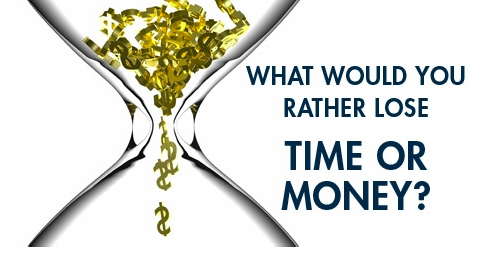
Money or time? Which is more valuable?

I’m sure this is a dilemma which faces most people at some point in their lives, many on a daily basis. What is more important; money or your time? Is working a 60 hour week with no free evenings, no weekends and no time with your family and friends worth it if you make plenty of money? Or is it ok to make less money but have more free time to do the things we enjoy doing? I worry sometimes that today’s society is so work driven that many people have forgotten what it’s like to do the things they enjoy and define themselves by their job title rather than their personality or virtues. Indeed I am discovering more and more often that without work people have no idea what to do with their time. Whatever happened to hobbies and interests? Making the most of time off?

Of course, money is vital. Without it we couldn’t live and essentially it is what makes the modern world go round. I love meeting people who have chosen a career or a job because they genuinely enjoy it, because I think that this is happening less and less. Very few people you will come across nowadays have a real affection for their occupation and even fewer actually enjoy going to work.  I often wonder whether people are making their career choices purely driven by money, or because if they were honest with themselves, they don’t really know what else to do…?

I have decided to take a part time job-share for next year and I have been amazed at how many people have looked at me in surprise and asked ‘What will you do instead?’ Managing to fill my days with activities I enjoy has never been something I’ve struggled with, yet so many can not possibly comprehend what else I would do with my time if I’m not at work. Which brings me back to my question. Has money become more important than time? Has working and earning taken over people’s lives to such an extent that they no longer yearn for those things they enjoy, instead unquestioningly accepting the fact that they must work and earn as much money as is humanly possible?

I’ve said it before and I’m sure this isn’t the last time it’ll be referred to here. We are only here once and we need to make the most of it. When I’m an elderly lady and reflecting on my life and choices, I don’t want to look back and wish that I hadn’t spent the majority of my life on earth slogging away at work. I’d like to look back and realise that yes, I could have had more money and lived a more lavish lifestyle, but instead I chose to live a simpler life, doing the things I enjoy and living life to the full.

Screen Shot 2015-11-01 at 18.56.15

Are doing things that scare you a good idea or is it just a cliché?

So it’s something we hear all the time. To quote Baz Luhrmann: “Do something every day that scares you”. But I wonder whether this is advice that should be branded around or whether it is a foolish suggestion that has no positive impact on a person’s life and indeed could be seen as having quite the opposite effect and proving detrimental. Clearly everyone is different so advice can never be universally helpful, however, is being afraid beneficial at all? Should we ‘face our fears’? Or are we better off steering clear of the things which we fear the most?

I have always seen fun as being in different categories. There are those things which are always brilliant, from the build up, to the activity itself and finally the aftermath. It’s all great fun, really enjoyable and everyone is glad it happened. Such as birthday parties, a wonderful holiday, skiing untracked powder…! Then there is another type of fun. The fun which makes you feel apprehensive beforehand, utterly terrifies you throughout, yet once it’s over you can breathe a great sigh of relief and are thrilled you did it. Although I’ve never done one myself, I imagine that a sky dive or a bungee jump are examples of such activities. People do these things to challenge themselves, to push their limits and to gain new experiences. But is there a third type of ‘fun’? The fun which seems like a good idea at the time and which you feel like you really should do, but which terrifies you and which you look back on afterwards and admit that it probably wasn’t worth the fear and panic. Now this doesn’t sound like a great deal of fun! But overall aren’t these experiences which shape you as a person and inevitably make you stronger?

Living in the mountains is what has got me thinking about this. There is so much excitement around us, so much to explore and new challenges to face every day. Many choose to stay within their comfort zones and keep life simple, enjoying the scenery and opportunities that the landscape provides. However others don’t want to stay where they feel comfortable and choose to take this a step further, or two or three! This could be anything from basic rock climbing to jumping off a cliff side wearing a wing suit! Why people choose to do some of these things, well you would have to ask them, but through mountaineering and alpine sports I have learnt more about myself than in anything else I’ve done. I don’t have a huge risk tolerance and would by no means describe myself as extreme or particularly adventurous, certainly not compared to a lot of the people in this valley!  But I am happy to try new things and have a go at something I never thought I would achieve. But being in the mountains is a scary business and no matter how long I spend in amongst them, I don’t think I will ever really feel brave.

I have done many things I am proud of and which tested my limits of both fear and exhaustion. And when it was all over I was happy I’d made it and would even consider doing it all again! But then there is the occasional time when things don’t quite go to plan and if I’m honest, I’d never do again if I was paid! I’m happy to say that I’ve never come to any harm in the mountains, yet I know many that have and I am fully aware of the potential consequences of a minor slip up or accident. Being scared is not something many people enjoy, including me, and I have realised that there are a million and one things I can do which challenge me and make me happy, without having to terrify me at the same time. I think it is so important to step out of your comfort zone every now and again, not to live in a safe bubble all your life. But personally I don’t think that doing things that scare me is beneficial. Things that test me, yes. Things that physically exhaust me, yes. Things that challenge me, yes. But things that scare me, I can live without.

Stunning scenery but slipping is not an option!
Not for those with vertigo!

Why do people queue so early for Easyjet flights??

It’s quite a simple pondering today, but one which genuinely puzzles me. It just so happens that I have travelled on 6 Easyjet flights in the last 3 weeks so have had plenty of time to observe this phenomenon. For those who are frequent travellers on the Orange Airline, they will perhaps remember that in days gone by there was no seat allocation on their planes, and it was a simple case of ‘First come, First served’. Therefore people threw away their manners, extended their sharp elbows and shoved their way to the front of the queue in order to board the plane first, and consequently get ‘the best seat’.  This I can sympathise with, as some passengers prefer the window, some the aisle, others the front of the plane and so on.

However, this is no longer the case. When booking an Easyjet flight all passengers are now allocated a seat on the plane as part of the booking process. Couples or families are cleverly placed on seats together, hence avoiding this mad rush for the ‘best seats’. I believe there is even a system to choose your seats for an extra cost if passengers so desire, therefore if a long legged traveller is desperate for the emergency exit seat, then they have this option.

So just to reiterate, it makes absolutely NO difference at what time you board that plane, your seat is there waiting for you, empty until you grace it with your bottom. Whether you get on that plane first or last, you will spend your journey in the same seat.

So why, may I ask, is there a snaking queue from the boarding gate long before the flight has even been called to board? Clearly it makes no difference to my journey, I just sit comfortably in my seat in the waiting room until there is no more queue, then board the flight with the few remaining passengers and head straight for my seat. But WHY do people feel the need to queue for SUCH a long time, when it makes not the slightest difference to their flying experience? And it’s not just on the occasional flight, it’s EVERY one! Flying from Nice to Geneva last week there were people queuing from easily an hour before the flight had even started to board; standing in a queue for over an hour, when they could have been sitting comfortably in a nearby seat reading their newspaper.

This is something that genuinely puzzles me and I can’t think of any reason why it happens other than that in our society people just feel the need to queue! But doesn’t everybody hate queuing? I certainly do, and will do anything in my power to avoid it.

I have no doubt that this will continue to happen and it will continue to amuse me. Long live the hapless queuer!

Queuing for the sake of queuing?

Should you move for the job or the place?

Only once have I moved somewhere to follow a job, and that was as a young newly qualified teacher who needed year of experience under my belt, so for the sake of ten months it didn’t really matter to me where I went. It was pretty dull, but a means to an end and since then I would never dream of moving somewhere I hadn’t chosen purely to follow a job. I’ve always lived in places that I want to live, places that I chose. But I’m very aware that this isn’t really the norm. Almost everyone you meet is where they are because either them or their partner has followed a job. I guess to most this seems like an obvious life choice, go where you can earn money, but it strikes me as surprising how highly people place jobs and careers on their list of priorities, and I’m intrigued as to why more people don’t consider where they would like to be and their quality of life as a lot more important. Indeed an astonishing number of people you meet have reached retirement having lived in a mediocre town that they simply tolerated rather than enjoyed, for the majority of their working lives. A two week holiday once a year is their only chance to escape to somewhere they enjoy. Fifty weeks of slog for two weeks of reward just doesn’t seem enough to me.

When I moved back to the Alps many years ago and got a teaching job, I lost track of the amount of new colleagues who asked me “So is your husband working here?” And oh the strange and bewildered looks I got for saying that no, my husband didn’t have a job here, I had chosen to move here!

Of course there are the obvious drawbacks to simply following your desires, and being reckless often doesn’t work out for the best, but sometimes I wonder whether people focus too much on money, jobs and careers, and forget that their own happiness also counts. How many people stop and consider whether they actually like living where they do? Or have they just grown accustomed to it, and aren’t brave enough to think about changing? I spend a lot of time considering these things, and like to think that I’ve found a healthy balance. I love my job, and could be doing exactly the same thing in a place I hate, but instead I chose to explore my options, and I discovered to my delight that there was a way of doing what I love, in a place I love.

My thoughts are, you only live once, so make the most of it…

New book for the Chamonix Book Club!

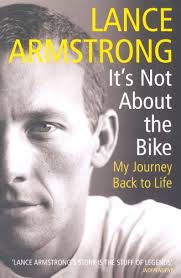
The new book has been chosen; this time a non-fiction. A far cry from The Book Thief, the new choice is ‘It’s not about the bike’, by Lance Armstrong. This was an interesting choice by one of the group who was a huge fan of the 7 time Tour de France winner, and is interested to see how people’s opinions may have changed since he was exposed as a drugs cheat. Does his cheating completely cancel out any success he ever had? Or is what he achieved still impressive despite now knowing what he did?

We shall find out!

Unknown-9
First non fiction choice for the Chamonix Book Club