See the Book Club Page for the review of our most recent book – ‘The Book Thief’ by Markus Zusak.

See the Book Club Page for the review of our most recent book – ‘The Book Thief’ by Markus Zusak.
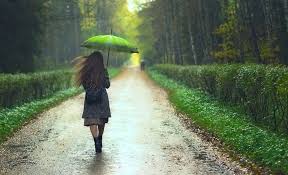
No-one likes the rain, but we all deal with it and try not to complain too much, especially those who live in unfortunately wet parts of the world. I’ve often said that despite the UK being a beautiful country, with some wonderful places and great people, I could never live there again because of the constantly awful weather! It’s true that in some places the rain is a welcome break, but I’d hazard a guess that for most people, heavy skies and incessant rain is purely just an inconvenience that has to be endured until the sun reappears.
I’ve never before really stopped to think about the profound impact that grim, dreary weather can have on your enjoyment and your overriding memory of a new place. For example, a couple of years ago I visited Canada for the first time, and thought it was a wonderful country. After travelling around and enjoying the whole experience, I ended up visiting Banff, on what happened to be the most grey, rainy and ultimately miserable day of my trip. Having initially intended to stay for a few days, after a few hours of aimlessly wandering around the small town in torrential rain, with nothing to do but duck in and out of souvenir shop after souvenir shop, I decided that Banff was so dire that I left the next day. I didn’t catch even the slightest glimpse of the glorious mountains for which it is so well known, and therefore my enduring memory of this little alpine town is miserable and wet. It’s is such a shame, but there is nothing we can do to control the weather, and it is virtually impossible to imagine what a place like that would be like when the clouds clear and the sun comes out.
On a similar note, I’ve spent the last few days in the Grenoble area of France, with the intention of some sightseeing and skiing. We spent a fantastic day in the city, heading up the historic Bastille and walking around the old town, even watching the local football team playing a match in the evening! We loved Grenoble, and everything that went with it. However, the following day was dreary, rainy and dull, but this didn’t deter us, feeling like this was a good day to head out and explore the surrounding villages. Later in the evening on returning home, we felt unusually despondent, and I could only put it down to the miserable weather. Despite having had a lovely day, full of happy banter and setting the world to rights with our words, we could no longer gaze up and marvel at the stunning mountain scenery and impressively low snow line, instead having to pick our way through muddy puddles and constantly readjust the umbrella.
Everything looks different in the rain, a little greyer and a little sadder, and you have to remind yourself that this would be the case anywhere and you mustn’t let it sway your opinion of a new place. I am certainly going to try my best to not let it obscure my enjoyment of a town or city, going in to it with an open mind and imagining myself there in sunglasses and a pair of flip-flops!
Living in a well known, massively overcrowded ski resort can become trying at times, especially during the school holidays. Being a non native myself I have no grounds to complain about the influx of expats and tourists in Chamonix, however it does nothing to dampen the irritation of never-ending queues wherever you go, from ski lifts to supermarkets, an endless sea of clueless punters trying to make themselves understood and carrying their skis as if they were a transporting a small child.
Couple this with a pitiful amount of snow falling in December, and the winter season was off to a bad start, with many of the pisted areas becoming so hard packed with artificial snow that it was more like ice skating than skiing.
But it’s not all doom and gloom, once you’ve lived somewhere for a while you start to learn how to escape the crowds and find the places that remain quiet and untouched, even in the busiest periods. Having only discovered the joys of ski touring in the last few years, and the pleasure and solitude it brings, I still marvel at how just a small amount of effort uphill can bring the finest rewards. Often the reward you are seeking is that all important powder stash, or the best snow around that can’t be reached from a piste. But sometimes no matter how heard you search, the reality is that the snow is pretty awful everywhere, and the best you can hope for is a day filled with beautiful views, fine company, a good lunch (!) and most of, total avoidance of those icy, crowded pistes, resulting in a long run down with no-one else around (even if it does involve a bum slide at the end!)


Without wanting to come across as a miserable party-pooper, having seen the coverage of the 2014 New Year’s Eve celebrations across the world, I can’t help but wonder if this is really the best way a nation’s money could be spent. The London displays on the Thames lasted 11 minutes and cost approximately £1.8million, a mere drop in the ocean compared to Dubai’s performance, which set a Guinness World Record for the World’s Biggest Pyrotechnics Display, at a cost of 6 million USD.
I know it’s only for one night of the year, but following several years of financial crisis and disastrous unemployment, blowing almost 2 million pounds on an 11 minute party seems a fairly extravagant way of throwing money away, as surely that money could have been put to better use?
I’m all for public displays and bringing nations and communities together, but I can’t help but wonder how it would be viewed if the Mayor of London decided that next year there will be no fireworks display, and all the money that would have been spent on it will be donated to charities. I can’t decide whether this would be well received or looked upon with scorn, as someone who simply wanted to ruin everyone’s fun. After all, how much difference would it really make to the 50,000 revellers if there were no fireworks to welcome in the new year, just a massive party instead? Would anyone notice?
That said, it has been suggested that the general public love fireworks so much that it actually makes financial sense to create a huge display, as it can enormously boost economic activity in the city. Perhaps this is true, who knows what the true economics are behind a NYE celebration?
I’d say it’s unlikely that we’ll see Boris Johnson making such a suggestion next year, and no doubt we’ll see an even bigger and more spectacular display. Or perhaps he’ll see this post and make some radical decisions… Watch this space…!

A recent pondering of mine has been considering how important it is to stay in the same job for a prolonged period of time. It strikes me that looking only as far back as one generation, people took a job following the end of their studies and generally stayed in that job or at least in that field of work, through good times and bad until retirement.
But this doesn’t seem to be the case any longer. People move from job to job at an alarming rate and will happily change careers late in to their adult lives, often to something radically different from their previously chosen path. A recent study by the Daily Mail found that as many as 1 in 3 people now remain in a job for less than 2 years. It is now not uncommon to come across people who graduated, worked their way up in a related career path, but then 10 years later chose to return to their studies and re-train as something entirely different. So it is clear that times are certainly a-changing, and moving jobs appears to be becoming much more acceptable, but is this shift in work and occupations a positive move, showing that we are becoming a more diverse and skilled workforce, or should we be harking back to our ancestors and showing more commitment when taking on a new job? Is there anything wrong with changing careers and adding new skills to a CV, or does this show a lack of commitment and an inability to persevere with a chosen occupation?
Indeed the chances of meeting someone today who has been in the same job for 30 years is rare to the point of obsolete. It is far more likely that you will meet a 30 year old who has worked in 6 different jobs and is already on their 3rd or 4th career. But although this is entirely different from the mindset of our parents’ and grandparents’ generations, it appears that this diversity is a quality that some employers now respect and actively seek when recruiting new staff, as it shows experience and a thirst for learning. 17 is certainly a young age to be choosing a university course that will set you up with a career for life, and with this in mind, it hardly comes as a surprise that a huge number of graduates have changed their minds by the time they collect their certificate, and end up pursuing further education in a different direction, or embarking on a career that bears no relevance to the course they studied for 3 years.
But which path is the best to take? Or does it vary from person to person? Many prefer the security of a job for life, or at least a job for a reasonable amount of time, as with it comes the stability of a secure monthly income, plus all the social and comforting benefits that come with staying in the same job year after year. And when I see people that are happily in their 5th or 6th year doing the same job, with no plans to change, I almost envy their contentment, as I am one of the breed that suffers from itchy feet, and feels the need to move on after a couple of years, always looking for the next challenge.
Perhaps the rise in popularity of the gap year is to blame for this shift in attitudes to work. Gaining valuable life experience is becoming more and more desirable, and indeed many employers are now favouring this experience over an academic qualification. It can be said that those who go straight in to employment following university have no real life experience, having only lived as students, compared to those who may well be younger, but may also have a year of travelling, independent living and experience under their belts. The need to explore and see the world is leading to more and more workers requesting sabbaticals, and specifically taking roles which allow them to travel.
Of course no-one can be criticised for the way they choose to live their life, and equally, no-one has the right to say one way of tackling the world of work is more acceptable than another. We all change and develop as we get older, and for some this means growing with their job, perhaps progressing up through the company, or moving in to a different department. For others this may mean deciding and wondering what’s next, and feeling the need to move on. Either of these options are fine, as long as they are made with an open mind, and are chosen for the right reasons. A 9-5 working week with 25 days holiday a year isn’t for everyone, but then again nor is a life spent on the road with only a 60 litre backpack full of trusty supplies to your name. It seems that frequently changing jobs is simply what the majority of people do these days, which doesn’t necessarily make it any more sensible or recommended, but just shows that there is now a plethora of options, rather than simply having to follow the prescribed formula of making a career decision early on and sticking to it.
I say you only live once, so be sensible and give it some thought, but ultimately, ignore social pressure, make your own decisions for the right reasons, and do what you want!

We have chosen our new book for the Chamonix Book Club! After much deliberation ‘The Book Thief’ by Markus Zusak was chosen. It was my turn to choose this time and I eventually decided on The Book Thief because I thought it was an original concept having the story narrated by Death, and more than anything I’m interested to see how the story is written. Having now seen the size of the book I’m a little nervous! We may possibly have to push the prospective date back to allow everyone to read it! Stay posted to find out what we think of it, and let me know your own thoughts on the book.
Having only recently watched for the first time the documentary ‘Super Size Me’, I am truly shocked to witness the severity of the obesity epidemic sweeping not only America, but also a huge number of very surprising countries (Syria is number three; who’d have thought?!) Of course it’s something we hear about on the news all the time; child obesity, healthy eating, dieting and weight loss, indeed some of the most popular programmes on television nowadays are based around cooking, baking and weight loss.
It seems the general public are fascinated by people’s size. It makes the front covers of magazines, the headlines of national newspapers, and is something that occupies the minds of so many of us. People are constantly watching what they eat, feeling guilty for overeating, buying yet another diet book, and throwing their money down the drain purchasing pointless detox plans and pills which have no beneficial effect whatsoever. I am genuinely intrigued at the way in which reality television has evolved so that we now take sheer delight in watching overweight people attempt to shed those pounds by being forced to eat less, under the watchful eye of a so called ‘dietician’.
Yes indeed, size and weight have become a first world obsession. Everyone wants to be thinner, and many will claim that they have ‘tried everything’, but still can’t lose weight. But what strikes me is that there is a common theme running through all these weight loss books, diet programmes, and food advice forums. What should we eat? What should we cut back on, what important food group should we avoid? But how many of them tell you to go and do some exercise?
Surely as a child at school we were all taught that we should eat healthily and take regular exercise? But why as adults do so many of us forget this? It’s hard to stomach just how much money is spent each year on faddy diets, detoxes, miracle pills, and weight loss programmes, but has it never crossed anyone’s mind to perhaps walk to work, or cycle instead or drive? Or to go out for a jog in the evening instead of watching television? Or perhaps get out and explore their local area on foot rather than going shopping at the weekend?
Of course many people wouldn’t consider themselves ‘sporty’, and the thought of donning a tracksuit and going running is distinctly horrifying. But what people don’t realise is that even the smallest change to their daily routine can make a huge difference to both their waistline, and their mental state. Exercise releases endorphins which make you feel happy, healthy and energised. I have yet to come across one diet book or television programme which encourages people to simply do more and eat less. It seems like such a simple solution. But to so many it is much more pro-active to have a shelf full of expensive books, and take those important pills every morning. Surely people must realise that they are kidding themselves, isn’t this just the easy option, which simply requires as little effort as possible? Every one of these programmes tells you to think carefully about what you eat, calorie count, and be ashamed of eating the wrong things, but do any of them mention the benefit of exercise? Not that I’m aware of.
It was truly shocking watching the effect that MacDonalds had on Morgan Spurlock, star of ‘Super Size Me’, but what I found even more disturbing was the tale he told of a pair of girls who tried to sue the afore mentioned fast food chain, blaming them for their obesity. Of course no one can deny that eating fast food every day is bound to have a negative impact on your size and overall health, but are we not the ones responsible for what goes in to our own mouths?
I felt genuinely speechless that this case had actually made it in to court, and a lawsuit had been filed against the food chain. It should have of course been immediately dismissed as total rubbish, and thank goodness in the end it was, but surely this is no different to suing a clothes chain for your overflowing wardrobe, or blaming the ocean for making you wet? Have we genuinely created a world where people are no longer accountable for their own actions, and are so affected by marketing ploys that they are coerced in to doing things they don’t want to do, and can no longer make their own choices?
I sincerely hope not, and I intend to continue to surround myself with others who see the benefit of being fit and healthy and can thankfully still make their own decisions as to what they might eat for their evening meal…
See my Book Club page for the review of our first book – The Giver by Lois Lowry.

I am fascinated by the idea of national identity, and where people claim they are from. I am intrigued by those who don’t feel any sense of national pride, versus those who fiercely defend their family’s heritage, regardless of whether they have ever lived there themselves. I spend a lot of time with children from a whole host of backgrounds, religions, nationalities, and with more spoken languages than I can keep up with.
Across my small class of 18, we have 13 nationalities, and 8 different mother tongues, and what makes it all the more mind blowing, is that each one of these children speaks fluent English as a second, third or even fourth language. This never fails to amaze me, as they have no real concept of just how impressive this is. Without so much as a second thought, they will speak one language to mum, perhaps another to dad, a third to their teacher, and even a fourth to a nanny or a cleaner.
In addition to this, although some of them may have lived their whole lives in one place, the majority of these children have spent their short lives moving from city to city, school to school, and have lived in more countries than the average person has holidayed in. They have the most wonderful stories, a whole wealth of life experience, and more knowledge about the world around them than you could ever imagine from someone three times their age.
On the face of it, this sounds like such an exciting and fascinating existence, wonderful preparation for the future, second and third languages on a plate, and exposure to children from all corners of the earth, so prejudice and bullying is almost non-existent. But when you scratch the surface of this enviable existence, where do these children come from, and who are they?
It is interesting for me to watch where their allegiances lie, which football teams they follow, and which country they will support of given the choice, because it is not always so clear cut. When it suits the situation they will back the USA no questions asked, but will fiercely defend the Spanish if needs be, or the Ecuadorians if the issue is raised. One of the most interesting parts of the school year is sitting down on the first day and asking the class what their nationalities are, and what languages they speak at home. You would imagine this would be a 5 minute task, yet in reality there is so much to discuss, and so many children that just aren’t sure, that before you know it, an hour has passed. Is your nationality where you were born, where you live, where your parents were born? Because for some this could provide up to four different choices.
I am in two minds as to what I think about these phenomenally bright, interesting, multi-lingual, multicultural children. Are they living the dream, a once in a lifetime opportunity reserved only for the lucky few? Or are they lost souls, destined for a life of globe-wandering, never sure who they are or where they’re from? Do we need a national identity? Is where you come from really that important? Or is it enough to just be?

Anyone who has ever spent time in the European Alps will may have spotted the large, black, crow-like birds circling around high above the mountains. The Choucas, native to the French Alps, are an unremarkable bird, keeping to themselves, disturbing no-one, and preferring to prowl around the lesser visited areas, away from the tourists. If you stay still in a quiet place you may find them creeping closer, on the hunt for scraps of food, but on the whole you will only notice them if you turn your eyes skywards.
Yet despite not making much of an aesthetic impact, legend has it that the Choucas circle around the mountains searching for those who have lost their lives, and it is agreed amongst mountain locals that the souls of the dead live on in these birds, remaining in the place they loved, and keeping watch over those who live on.
Indeed there are too many who lose their lives each year in the high mountains, from ski accidents, to a rock climb that goes wrong, to a devastating avalanche. Whether there is any truth in it or not, it is a lovely thought that every time you spot one of these unassuming birds circling ominously above the snowy peaks, you are seeing the spirit of a fallen mountaineer living on.

 Sharon Wray Writing